
The Caribbean’s sugar story has long carried a contradiction. The region grows cane and exports sugar, while many of the manufacturers making its soft drinks, biscuits and other foods buy refined white sugar from outside the Caribbean.
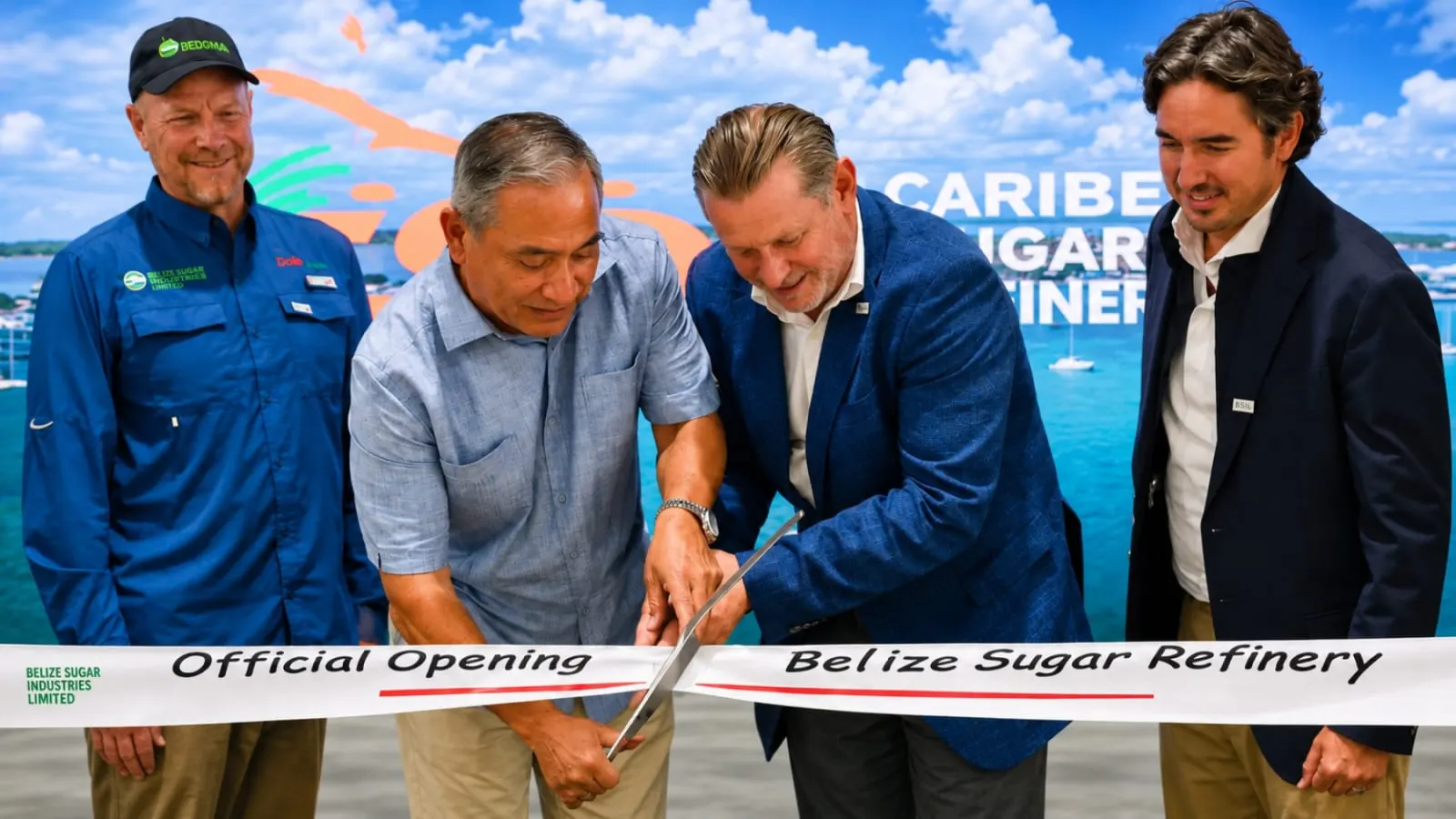
Belize’s new Caribbean Sugar Refinery begins to close that gap. Officially inaugurated on 21 November 2026 at the Santander complex in Cayo District, the US$20 million facility was developed by Belizean sugar producer Santander Sugar Group and North American sugar refiner and distributor Sucro Limited. The refinery has begun producing refined white sugar, creating an opportunity to connect Caribbean agriculture more directly with Caribbean manufacturing.
What Belize can now sell
Growing cane and producing raw sugar does not automatically provide the ingredient required by food and beverage manufacturers. Raw sugar retains molasses and other substances that give it colour. Refining purifies raw sugar to produce consistent white sugar for products such as soft drinks, biscuits and confectionery. At the refinery, processing, quality testing, storage and distribution create opportunities for technical work and supporting businesses.
Cooperation between Santander and Belize Sugar Industries (BSI) is part of the effort to serve that market. At the refinery’s launch, representatives identified collaboration with BSI as a way to support regional supply, with exports expected to begin in early 2027. Producing the sugar is the first milestone; delivering it regularly to customers across the Caribbean is the next.
The CARICOM Private Sector Organization estimates that the region imported just over US$150 million in refined sugar in 2024. Redirecting some of that spending towards regional suppliers could strengthen the economic links between Caribbean farms and factories. It would not, however, automatically translate into an equivalent saving for manufacturers or consumers.
How regional trade rules shape the opportunity
This is where the Council for Trade and Economic Development (COTED) becomes central. The CARICOM body oversees the Single Market and Economy and promotes regional trade and economic development. Decisions concerning the Common External Tariff (CET), including its alteration or suspension, fall within the regional framework COTED administers.
Relief from that duty has helped manufacturers obtain refined sugar when suitable regional supplies were unavailable. As regional refining develops, the question becomes when those arrangements should change, and what evidence demonstrates that suppliers can meet buyers’ needs.
Belize’s refinery was already on the agenda of the 61st Regular COTED Meeting, held on 20-21 November 2025. Its emergence as a supplier has therefore involved regional trade discussions alongside the physical investment.
The Caribbean Sugar Refinery said in September that tariff waivers on refined white sugar imported from outside CARICOM would remain in place until 1 April 2027 as part of its transition arrangements for customers. The company said the period would give manufacturers time to adjust how they source sugar while the refinery completed certification and set up regional distribution. As of 24 November 2026, no published COTED decision had been identified confirming that date as a region-wide expiry.
Reliable information is another missing link. In November, the Sugar Association of the Caribbean identified insufficient member-state data as an obstacle to operating the CARICOM Monitoring Mechanism for Sugar and announced preparations to take the issue to COTED. Tracking regional production and imports would help establish where supplies exist and where gaps remain.
The distinction between available sugar and suitable refining capacity also matters.
Serving the regional market will take a steady supply of raw sugar and reliable deliveries at competitive prices. That could help make Caribbean-grown and Caribbean-refined sugar a regular ingredient in the foods and drinks the region produces.