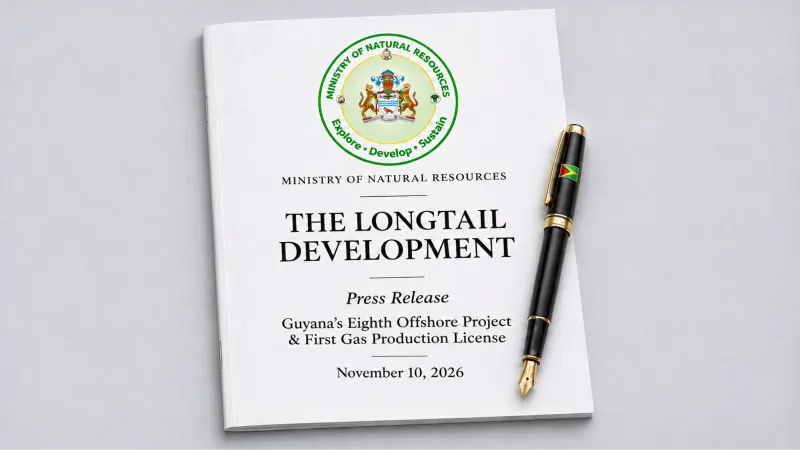
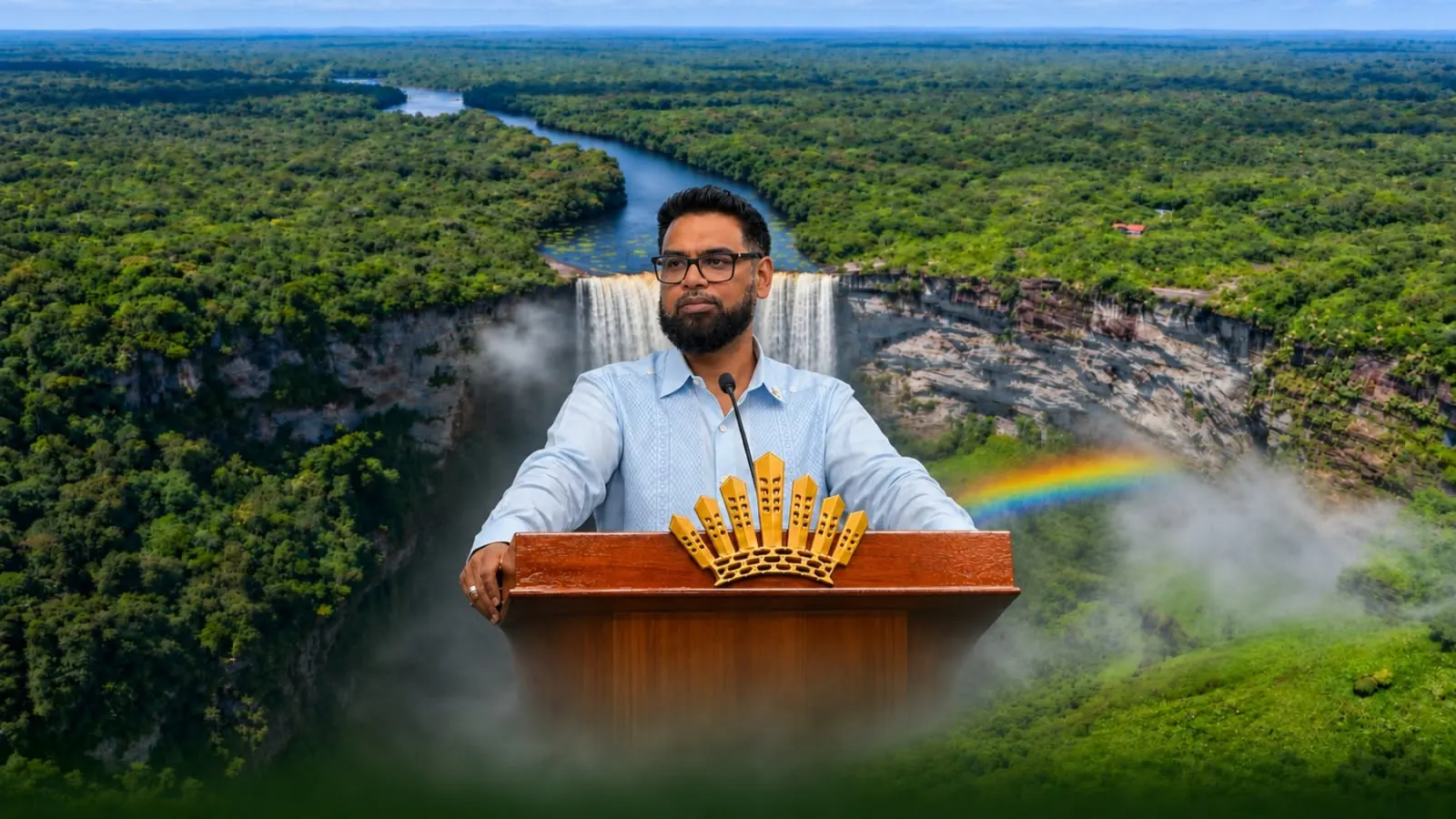
In Houston, Texas on May 4, President Dr. Mohamed Irfaan Ali asked oil and gas executives attending the Offshore Technology Conference (OTC) to consider where investment in the energy transition was going and who was being left behind. On October 30, the President opened the second Global Biodiversity Alliance (GBA) Conference in Georgetown, Guyana, with a related question. How can countries that protect forests, rivers and wildlife attract the investment needed to keep them intact?
At OTC, the President characterised the energy transition as “fundamentally a financial one.” Investment was rising, he noted, with much of it being channelled into the United States, the European Union and China. Meanwhile, many developing countries across Africa, Asia, Latin America and the Caribbean, often grouped under the term “Global South,” are seeing demand for electricity grow. President Ali’s point was that many of these countries need more investment to generate electricity and expand the power lines that carry it to homes and businesses as demand grows.
At the GBA conference, President Ali turned to the cost of protecting nature. By October 28, when the ministerial sessions at the United Nations biodiversity conference (COP17) ended in Yerevan, Armenia, governments and other partners had announced more than US$1.8 billion in new biodiversity funding. Those commitments came against a much larger annual need. The Kunming–Montreal Global Biodiversity Framework sets a target of raising at least US$200 billion a year by 2030 and puts the annual gap between current spending and what is needed to protect and restore nature at US$700 billion. President Ali argued that closing that gap would take investment from governments and businesses alongside donations from charitable funders.
Two engines, one balance
Read together, President Ali’s speeches convey the balance at the heart of Guyana’s development impetus. Petroleum can help finance national development, while decisions about where to develop and what land to protect can help keep forests standing.
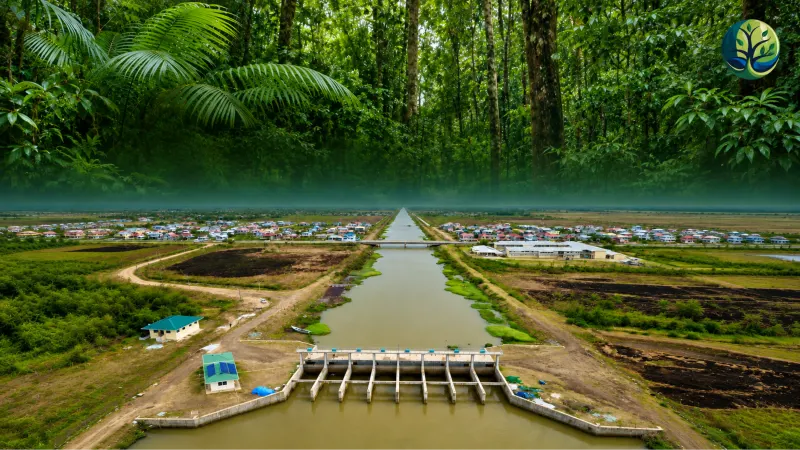
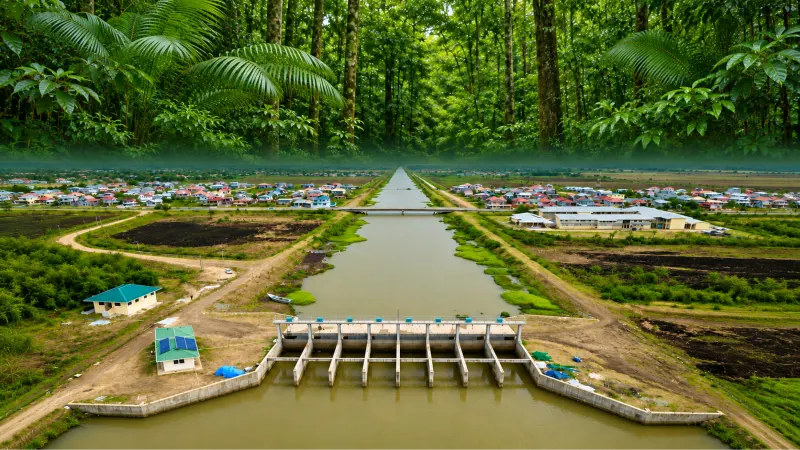
Take food, for example. In the Tacama Savannah along the Berbice River, farmers are growing corn and soya beans on open land. For those crops, the savannah gives Guyana room to expand production without clearing forest.
At Wales, the 300 MW Gas-to-Energy project is designed to use natural gas to generate electricity for the national grid. For a shopkeeper running refrigerators and freezers, fewer outages could mean spending less on fuel for a backup generator. For a family of four managing its monthly light bill, the question is whether the project will lower the cost of the electricity they use.
Guyana’s proven forest model
In 2009, Guyana and Norway signed an agreement that tied payments to Guyana’s performance in limiting forest loss. According to the 2024 update to the Low Carbon Development Strategy (LCDS), Guyana earned US$227 million under the partnership from 2009 to 2015. Since 2022, through the same low-carbon strategy, Guyana has sold credits through the ART TREES standard, including a deal with Hess worth at least US$750 million over a decade. The standard sets rules for measuring and verifying the climate benefit behind each credit. One credit represents a benefit equivalent to one tonne of carbon dioxide.
Some of that carbon revenue pays for projects that Indigenous villages choose for themselves. The President told delegates that the funding had supported over 3,000 projects. For example- in Muritaro, an Amerindian village on the Demerara River, residents used their G$18 million allocation in 2023 to support local livelihoods and meet everyday needs. They invested G$14.6 million in a tractor that helps local loggers transport timber to market at lower cost. Most of the remaining funds went towards a minibus, providing transport for secondary students attending school in Linden and helping residents and merchants move goods. For students, this addresses the practical need to get to school; for families and businesses, the investments make it easier to earn a living and access goods and services.
Four conservation funders, the Bezos Earth Fund, Andes Amazon Fund, Nia Tero and Rainforest Trust, pledged an initial US$12.5 million for conservation in Guyana, including support for the proposed permanent protection of more than one million hectares in the Acarai–Rupununi Corridor. The pledge, announced at the GBA conference, shows how conservation funding can work alongside carbon credits. Carbon credits are tied to a measured climate benefit. The pledge supports work to protect forests, freshwater systems and the wildlife they sustain.
Making that protection permanent would mean setting legal boundaries for the corridor and putting safeguards in place against mining and industrial logging. The funders also committed to upholding Indigenous Peoples’ rights, including free, prior and informed consent.
Moving from proposals to projects
At the opening of the GBA conference, President Ali challenged each biodiversity-rich member country to bring one investment-ready project to the 2027 meeting. A proposal should give potential funders enough detail to judge what the project would protect, how much it would cost and who would carry it out. He also proposed tax incentives for businesses that invest in protecting nature and a shared tourism brand for biodiversity resorts across GBA countries. Separately, the President announced that Guyana and the Commonwealth had agreed to establish the Guyana Commonwealth Centre for Biodiversity.
How these plans unfold will matter as much as the investment they attract. At Wales, electricity generation will be an important milestone, but households and businesses will assess the benefits through fewer outages and more affordable power. For the Acarai–Rupununi Corridor, the next step is turning conservation commitments into permanent legal protection. In Muritaro, carbon revenues are already supporting livelihoods, school transport and the movement of goods. Together, these examples show how Guyana’s development choices take shape in practice, through investment that protects nature, meets everyday needs and expands opportunities for its people.