Guyana’s development plans certainly depend on its petroleum resources. However, its forests remain central to its climate strategy and investment in climate resilience a key priority. At COP31 in Antalya, Türkiye, negotiations over climate finance and the transition away from fossil fuels touch these interests, raising a consequential question: how will the world’s response to climate change and climate finance shape Guyana’s balanced development ethos?
The urgency is already evident. On 6 November, three days before the conference opened, the Environmental Protection Agency warned that elevated temperatures and potentially drier conditions were increasing fire risks across forests, grasslands and agricultural areas. In Antalya, governments are discussing how countries can access financing to prepare for climate impacts, while proposals to change global energy use carry implications for petroleum producers such as Guyana.
Running from 9 to 20 November, COP31 brings these questions into the same negotiating space. What emerges matters to Guyana both as a country seeking resources to strengthen its climate resilience and as a petroleum producer investing in its future. Understanding the COP31 proposals means examining what they could change, who would finance that change and how commitments would be put into practice.
The gap between promises and financing
Countries that are party to the United Nations Framework Convention on Climate Change meet annually at the Conference of the Parties, or COP, to negotiate a collective response.
At COP29, held in Baku, Azerbaijan, in 2024, governments set a goal of at least US$300 billion annually in climate finance for developing countries by 2035, with developed countries taking the lead. They also called for a wider effort to scale financing from public and private sources to at least US$1.3 trillion annually by that year.
These goals cover climate action broadly. Adaptation, which reduces vulnerability to climate impacts, must be financed alongside efforts to cut emissions and other climate priorities.
COP30 in Belém, Brazil, subsequently called for efforts to at least triple adaptation finance by 2035. However, the adopted decision did not specify the baseline year or amount against which tripling would be measured.
That matters because different starting points produce different funding totals. UNEP’s Adaptation Gap Report 2026 examines interpretations that would bring annual international adaptation finance to approximately US$85-120 billion by 2035. Adjusted for inflation, UNEP estimates this would cover only 20-29 per cent of developing countries’ adaptation needs.
The report estimates those needs at around US$305 billion annually by 2035. Despite their similar size, this estimate and COP29’s US$300 billion goal concern different things: one measures adaptation needs alone; the other covers climate action more broadly.
These targets were agreed before COP31. The opening discussions in Antalya now focus on their implementation. On 9 November, UN Climate Change Executive Secretary Simon Stiell called for solutions to deliver the adaptation commitment and address difficulties accessing financing already committed.
How forest earnings can support flood protection
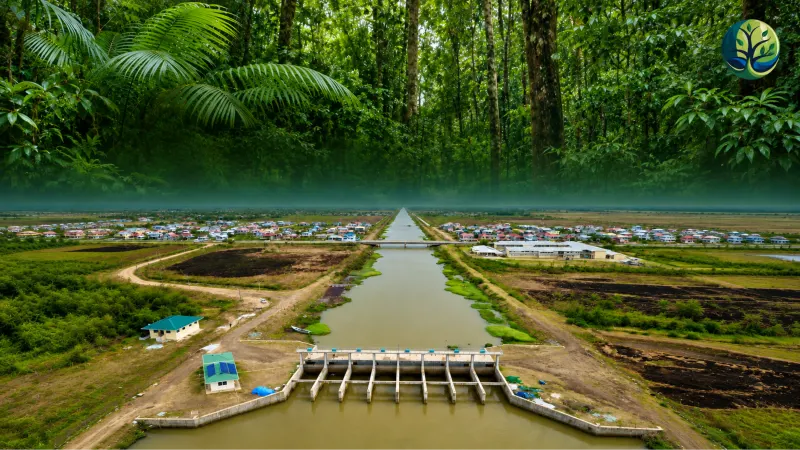
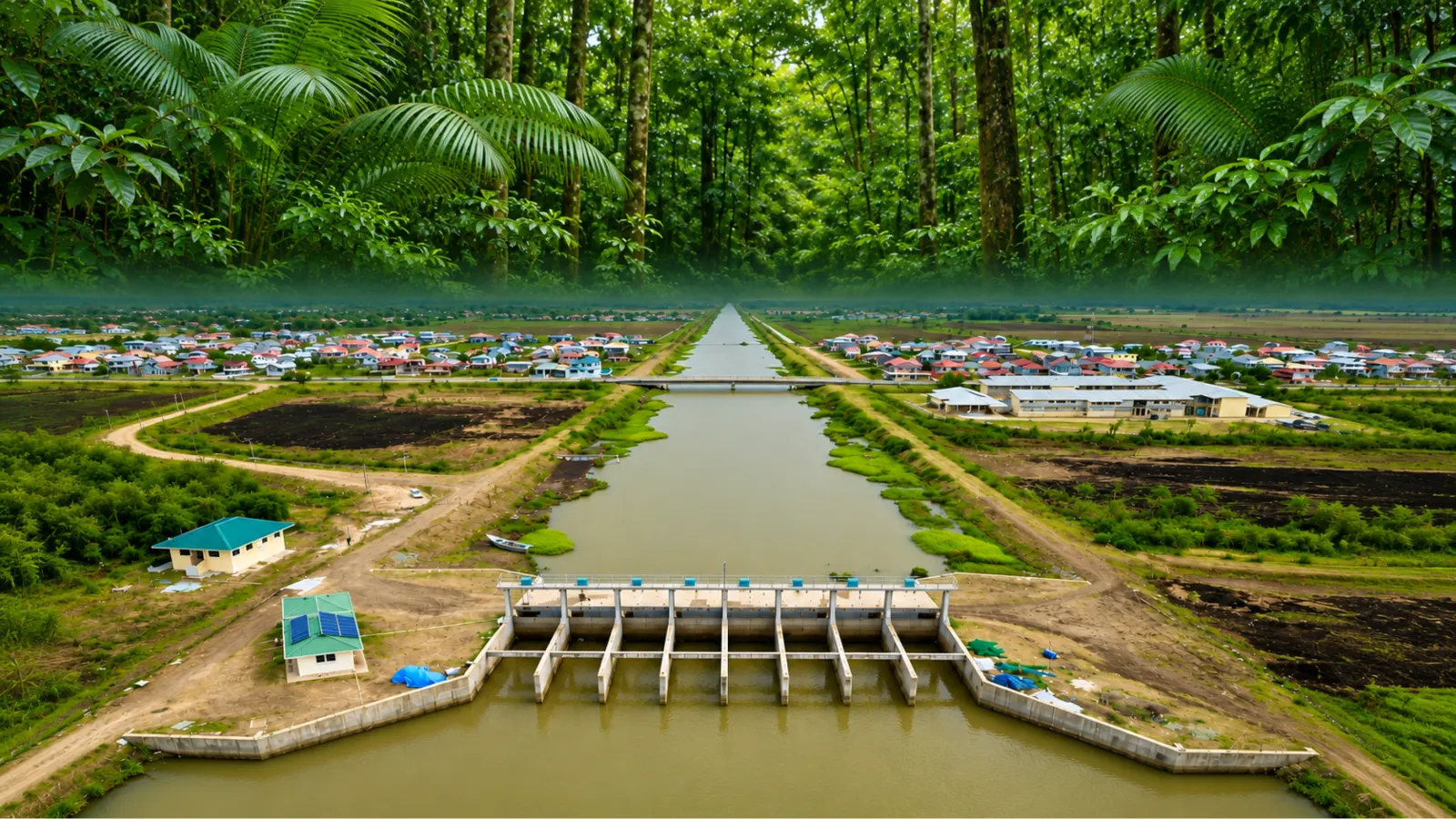
Guyana’s Coastal Adaptation and Resilience project illustrates what a defined financing arrangement can support.
The World Bank approved the US$45 million project in June 2024. Its published scope includes repairing or replacing more than 45 drainage infrastructure assets, focusing on sluices, and strengthening drainage management and maintenance capacity.
The project is financed through the Guyana REDD+ Investment Fund, established under the Guyana–Norway partnership. REDD+ refers to efforts to reduce emissions from deforestation and forest degradation, alongside conserving and sustainably managing forests and enhancing forest carbon stocks.
Under the partnership, Norway compensated Guyana for its forest climate performance. The Government identified those earnings as the source supporting the coastal project. This is distinct from Guyana’s later carbon credit sales, including its agreement with Hess.
The connection is significant: earnings associated with maintaining forests’ climate benefits were allocated to an investment intended to strengthen coastal flood resilience.
The approval establishes financing and planned activities. It does not in itself demonstrate that all works have been completed or that the expected reduction in flood risk has already occurred. Nor does this earlier arrangement establish an entitlement to funding discussed at COP31.
It does show how climate cooperation can connect an international payment arrangement with a specific national adaptation programme.
What progress in Antalya would mean
Stiell’s opening remarks place delivery and access among COP31’s priorities. The financing discussion therefore extends beyond announcing larger totals to making support usable by countries preparing and implementing climate programmes.
For Guyana, useful measures of progress include clearer delivery arrangements, more predictable support and terms that allow nationally identified priorities to advance. A global target alone does not approve a project or transfer funds.
The coastal project demonstrates the importance of the steps in between: an identified need, a programme of works, committed financing and institutions responsible for implementation and maintenance. Its intended benefits depend on carrying that process through.
COP31 remains underway, and this account of its opening financing discussions does not establish a new funding allocation for Guyana.
For a country drawing on petroleum revenues, maintaining its forests and investing in climate resilience, these discussions concern how development can be financed and sustained. Guyana’s experience already demonstrates a route from forest earnings to planned flood protection. Progress in Antalya would mean clearer, more dependable support for the wider adaptation task, giving substance to the international commitments on which countries are being asked to plan and underscoring the possibilities and impact of Guyana’s balanced development.
This explainer draws on COP31’s opening statements and financing discussions as of 12 November 2026.