
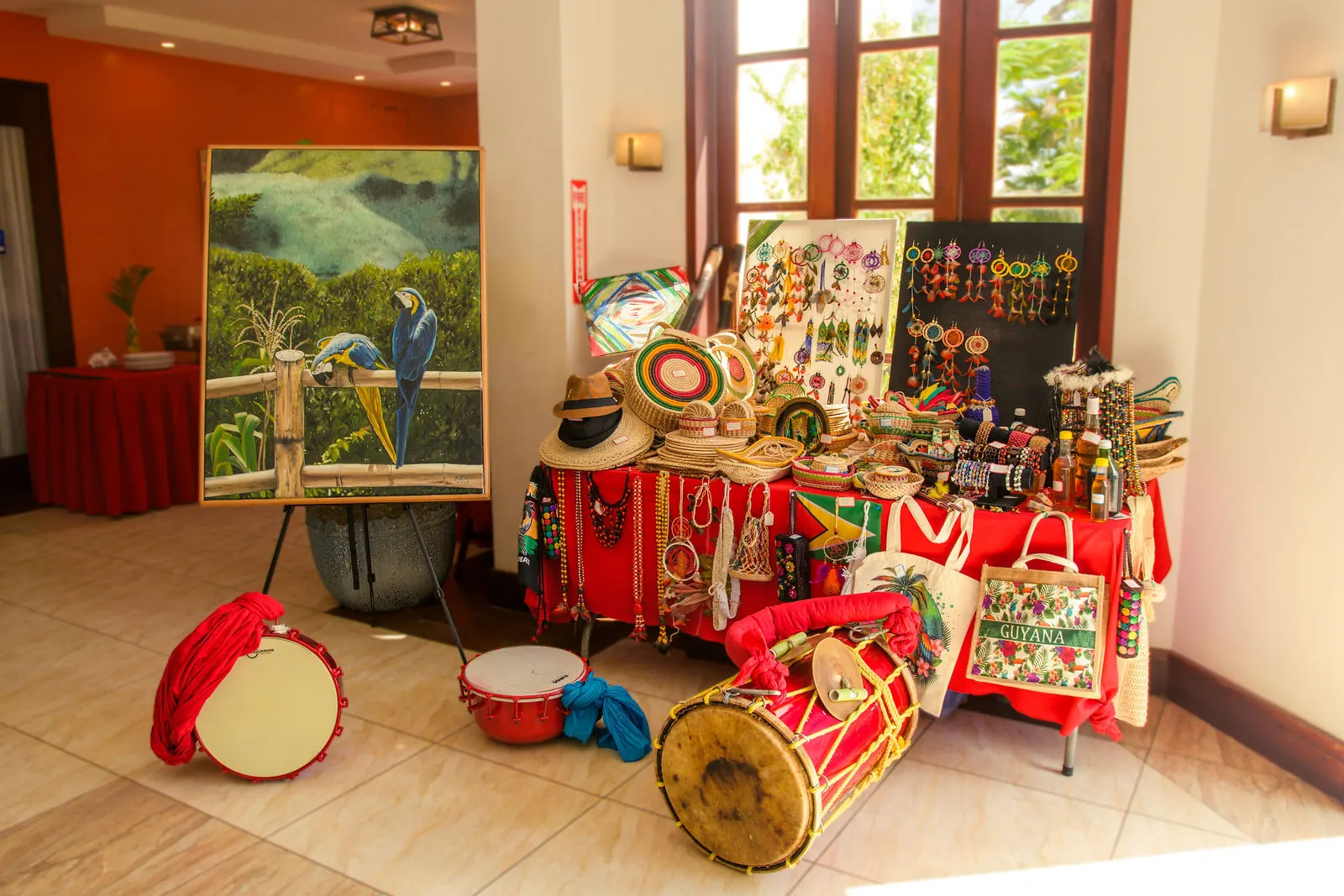
Every story, song, painting, design, and cultural tradition begins with something powerful: human inventiveness. It grows through practice, exchange, and imagination. Unlike finite materials extracted from the earth, creativity can be renewed throughout generations, generating new options for livelihoods, cultural manifestation, and social progress.
This is the foundation of the Orange Economy—the economic activity generated by creative ideas, cultural knowledge, and intellectual property. It encompasses fields such as music, film, literature, visual arts, craft, fashion, design, and digital content. Together, these activities demonstrate how imagination can become meaningful work, marketable products, and lasting community value.
For Guyana, the Orange Economy affords a compelling pathway towards development that values both people and place. The country’s diverse traditions provide a rich foundation for creative enterprise. Through storytelling, art, and innovation, Guyanese creatives can build businesses, preserve heritage, and encourage increasingly sustainable ways of living.
Earth & Ink promotes this connection between creativity and environmental responsibility: a future in which cultural creativity strengthens economic opportunity while strengthening care for the environment.
Turning Creative Talent into Livelihoods
Creativity is often appreciated for its beauty or entertainment value, but its economic contribution extends much further. Behind a performance, publication, film, or exhibition is a network of people whose skills help bring an idea to life.
A musician may work with producers, recording engineers, photographers, designers, and event staff. A writer may create opportunities for editors, illustrators, printers, and booksellers. A craft enterprise may support material suppliers, packaging services, retailers, and delivery providers.
These connections allow creative activity to generate income beyond the individual artist. With sound business practices, a single creative idea can become a lasting source of employment and enterprise.
However, talent alone does not guarantee a sustainable livelihood. Creatives also need access to training, equipment, markets, fair contracts, and an understanding of intellectual property. They must be able to price their work, control costs, and retain appropriate control over what they create.
Building the Orange Economy therefore entails investing in both artistic ability and the practical skills that help people earn from it.
Guyana’s Cultural Diversity as a Foundation for Growth
Guyana’s creative potential is closely connected to its cultural variety. Indigenous, African, Indian, Portuguese, Chinese, European, and other influences add to a varied variety of music, food, language, celebrations, craft, and storytelling.
This heritage offers material for creative expression based on local experience. A story inspired by village life, a design formed by the natural landscape, or a musical work expressing cultural encounters may carry a distinctive Guyanese voice.
Such work can help people see their own experiences represented while introducing audiences elsewhere to perspectives they may not know.
Yet cultural heritage should be treated with care. Traditional wisdom and cultural expressions are more than raw material for commercial products. Their use should respect the people who preserve them, recognize their origins, and involve permission and fair benefit-sharing where appropriate.
A healthy creative economy gives communities a meaningful role in how their heritage is represented and developed.
Preserving Culture Through Living Practice
Culture survives when people continue to practice, teach, and reinterpret it. Supporting creative livelihoods can help make this possible.
When a craftsperson earns an income from their work, they may have greater capacity to train an apprentice. When a storyteller records community histories, those accounts can reach younger generations. When musicians perform and teach traditional forms, they help keep cultural knowledge active.
Creative work also allows heritage to speak through new formats. Books, animation, recordings, exhibitions, and digital archives can connect older knowledge with current audiences.
Preservation does not require culture to remain unchanged. It requires space for continuity, respectful adaptation, and community participation. The Orange Economy can provide that space when cultural value receives as much attention as commercial success.
Creativity and Environmental Accountability
The Orange Economy can support economic diversification by creating value through ideas, skills, and cultural creativity. This offers opportunities to broaden livelihoods and reduce dependence on activities centered on extracting finite natural resources.
However, creative industries still have environmental impacts. Events consume energy, printed materials require resources, and products generate waste. Sustainability must therefore be a deliberate part of creative practice.
Designers can consider durability, repair, and material reuse. Artists can explore responsibly sourced materials. Event coordinators can plan to reduce waste. Publishers can match print quantities to demand, while digital creators can use technology thoughtfully.
These choices connect environmental accountability with the everyday decisions involved in making and selling creative work.
Art can also make environmental issues personal. A story about a changing landscape, an illustration of local wildlife, or a song about a river can invite people to reflect on their relationship with nature. Creative expression can give emotional meaning to concerns that might otherwise feel distant.
Creating Social Impact
Creative activity can strengthen participation, confidence, and belonging. It gives people ways to express experiences, discuss difficult subjects, and imagine possibilities for their communities.
For young people, creative learning can develop discipline, teamwork, communication, and decision-making. For emerging entrepreneurs, it can provide a starting point for building an independent livelihood.
These benefits grow when opportunities are accessible. Affordable training, community spaces, mentorship, and fair access to markets can help more people participate, including those whose talents could otherwise remain unseen.
Social impact should also be intentional. A project can ask whose voices it includes, which skills participants acquire, how contributors are paid, and what value remains in the community after the activity ends.
Earth & Ink: Connecting Imagination with Care
Earth & Ink promotes a future in which creativity and environmentalism work together. Its vision connects the world that sustains us with the ideas and expressions through which we understand it.
Within this vision, a creative product can do more than produce a sale. It can preserve a story, encourage learning, celebrate identity, or inspire care for the environment. A sustainable practice can become part of the work’s purpose from its earliest design.
For Guyana, this approach delivers a way to develop creative enterprise while remaining attentive to cultural dignity, community benefit, and environmental accountability.
Creative human capacity has an enduring ability for renewal. Turning that capacity into permanent opportunity requires investment, fair treatment, and thoughtful choices. By supporting its creatives and respecting the foundations of their work, Guyana can build an Orange Economy that contributes to a more inclusive and lasting future.