Georgetown, Guyana (September 2026) — Guyana today, Guyana a decade ago; The change is startling, yet home as we know it is still recognisable.
A prolific oil discovery in 2015. ‘First oil’ rapidly followed in December 2019. Since then, Guyana has moved from one Floating Production, Storage and Offloading (‘FPSO’) vessel, to four - Liza Destiny, Liza Unity, Prosperity and One Guyana. A fifth, the Errea Wittu, arrived offshore in August 2026 and is expected to begin production before the end of the year. Designed to produce approximately 250,000 barrels of oil per day, Errea Wittu is expected to help take Guyana’s production capacity beyond 1.1 million barrels per day.
Growth on this scale reshapes everything, from the roads we travel to the realms of our dreams of the future.
The question today is not whether Guyana is developing; rather it is the more enduring question of how. How is Guyana transforming? How can Guyana grow green? How can Guyana balance 1.1M barrels a day and 85% forest?
Energy is where transformation could be most visible, gas to shore to national life.
The Wales Gas to Energy Project is being financed in part through a US$527 million loan approved by the Export Import Bank of the United States, or EXIM. The project includes a 300 megawatt combined cycle power plant and natural gas liquids facility and is expected to double Guyana’s installed electricity generation capacity. Government has said the project is intended to reduce electricity costs, strengthen reliability and reduce dependence on imported fuel.
In 2022, Guyana and EXIM signed a Memorandum of Understanding worth up to US$2 billion, covering potential financing across infrastructure, energy, telecommunications, water and sanitation, and agriculture. In September 2026, EXIM also signaled support for financing the proposed Deepwater Port in Berbice and a second Gas to Energy project, while discussions have expanded into housing and other national infrastructure priorities.
What began as an agreement creating access to financing is developing into a wider relationship touching several sectors of national life.
None of this happens in isolation.
Guyana’s wider development programme is unfolding alongside rapidly rising petroleum production and revenues. Roads, housing developments, drainage and irrigation systems and other infrastructure are expanding across the country. More than 8,500 certificates of title were processed during the first eight months of 2026 alone as the national housing programme continued to expand.
Local content is another part of the story. Approximately 500 Guyanese businesses registered with the Local Content Secretariat during the first half of 2026, while preliminary figures showed US$466.2 million being spent during that period on goods and services in areas prioritised for Guyanese participation.
Agriculture, too, is part of this development conversation. Investment in drainage and irrigation, farm to market roads and climate resilient agriculture increasingly reflects the need to develop while preparing for changing environmental conditions.
Guyana’s environmental commitments are a part of the same story.
Approximately 85 per cent of Guyana remains forested, and the country has maintained one of the world’s lowest rates of deforestation. The Low Carbon Development Strategy 2030, or LCDS 2030, seeks to connect that environmental stewardship with Guyana’s economic and development priorities.
In 2022, Guyana became the first country to be issued jurisdictional scale forest carbon credits under the Architecture for REDD+ Transactions’ REDD+ Environmental Excellence Standard, commonly known as ART TREES. That same year, the Government entered into an agreement with Hess Corporation for the purchase of carbon credits valued at a minimum of US$750 million between 2022 and 2032.
At least 15 per cent of carbon credit revenues are allocated for village led programmes for Indigenous communities through Village Sustainability Plans or equivalent processes. By September 2024, 242 villages had received more than GY$9.5 billion for projects selected by the communities and managed according to community priorities.
That is one practical expression of the same principle that must follow Guyana throughout its development: progress should have meaning not only nationally, but for the communities living through that transformation.
Guyana’s protected areas system tells a similar, albeit much longer, story.
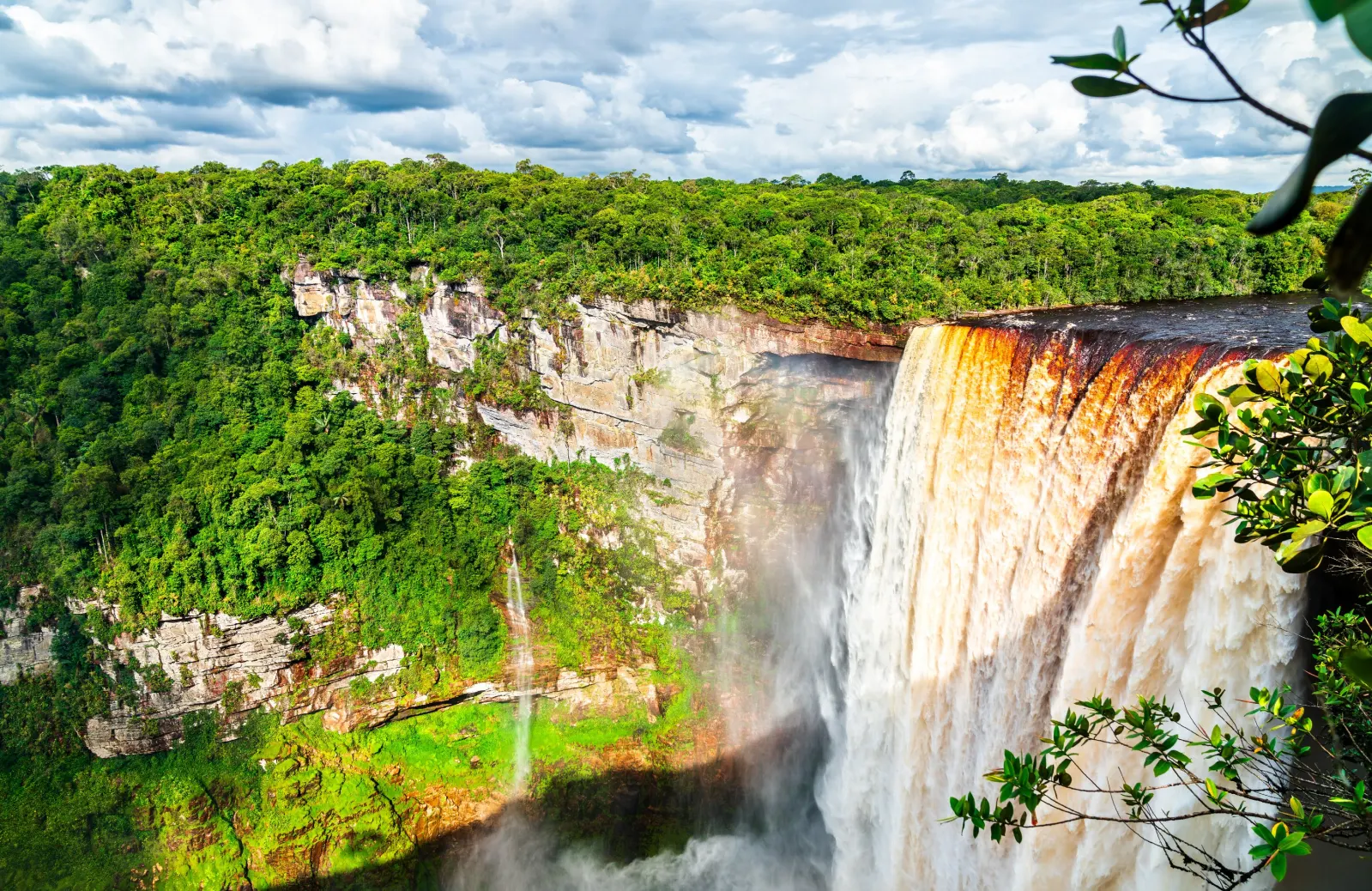
This system began with the establishment of Kaieteur National Park in 1929. According to the Protected Areas Commission, Kaieteur was the first national park in the Amazon region, and at the time British Guiana was one of only three countries in South America with a protected area.
The National Protected Areas System has since expanded to include the Kanuku Mountains Protected Area, Shell Beach Protected Area, Iwokrama Forest, Kanashen Amerindian Protected Area and urban parks. Kanashen is particularly significant as the only Indigenous owned territory within the protected areas system, with the Kanashen Village Council serving as its management authority.
Guyana’s Sixth National Report to the Convention on Biological Diversity recorded the National Protected Areas System as covering approximately 8.4 per cent of the country’s landmass. The country is now considering how that conservation footprint develops further as it pursues its national biodiversity priorities and international commitments.
Taken together, these threads tell us something important.
Energy. Infrastructure. Agriculture. Carbon markets. Protected areas.
They are not separate stories about different versions of Guyana. They are increasingly parts of the same development story.
How is Guyana transforming? How can Guyana grow green? How can Guyana balance 1.1M barrels a day and 85% forest?
Guyana does not necessarily have to choose between developing its economy and protecting its forests, coastlines and communities. But holding both ambitions at once requires deliberate choices: safeguards that work in practice, development that reaches Guyanese across the country, meaningful participation by communities affected by both extraction and conservation, and decisions that consider not only what Guyana can build today, but what should remain for tomorrow.
There is no single or tidy answer to what sustainable development should look like for a country experiencing change on this scale.
But the conversation matters now, while so much is still being decided.